


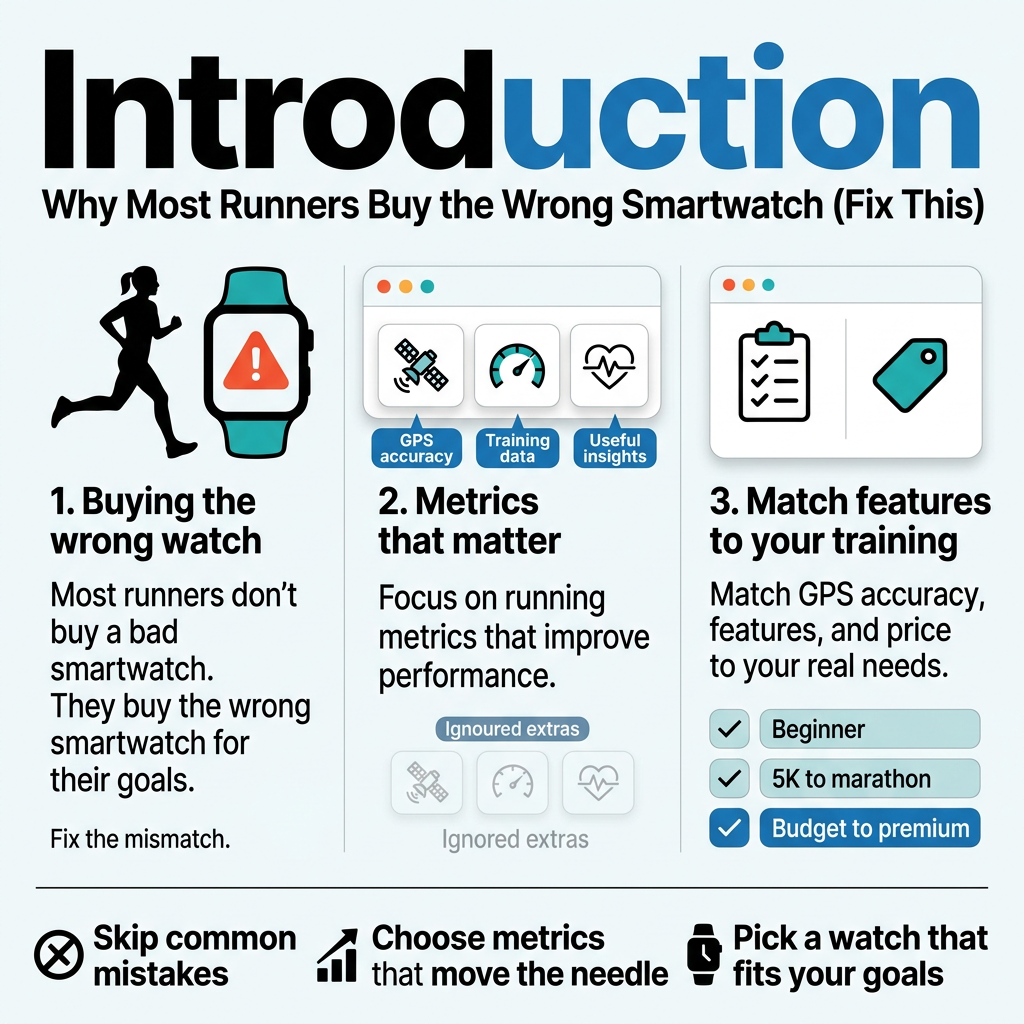
Why Most Runners Buy the Wrong Smartwatch (Fix This)
You did your research, read a few reviews, picked a smartwatch that looked solid — and now it’s sitting on your wrist not doing half of what you actually need. Sound familiar? You’re not alone. Most runners don’t buy a bad smartwatch. They buy the wrong smartwatch for their specific goals, and that’s a completely different problem.
This guide is for you if you’re a runner — beginner or seasoned, 5K casual or marathon-obsessed — who wants a running performance tracking watch that genuinely earns its spot on your wrist.
Here’s what we’re breaking down:
- The mistakes runners make when shopping for a smartwatch (so you can skip them entirely)
- Which running metrics actually move the needle on your performance — and which ones just look impressive on a spec sheet
- How to match smartwatch GPS accuracy, features, and price to your real training needs
No fluff, no generic “just buy this one” advice. By the end, you’ll know exactly how to choose a smartwatch for running that fits your goals — not someone else’s race schedule.
Let’s get into it.
The Costly Mistakes Runners Make When Choosing a Smartwatch
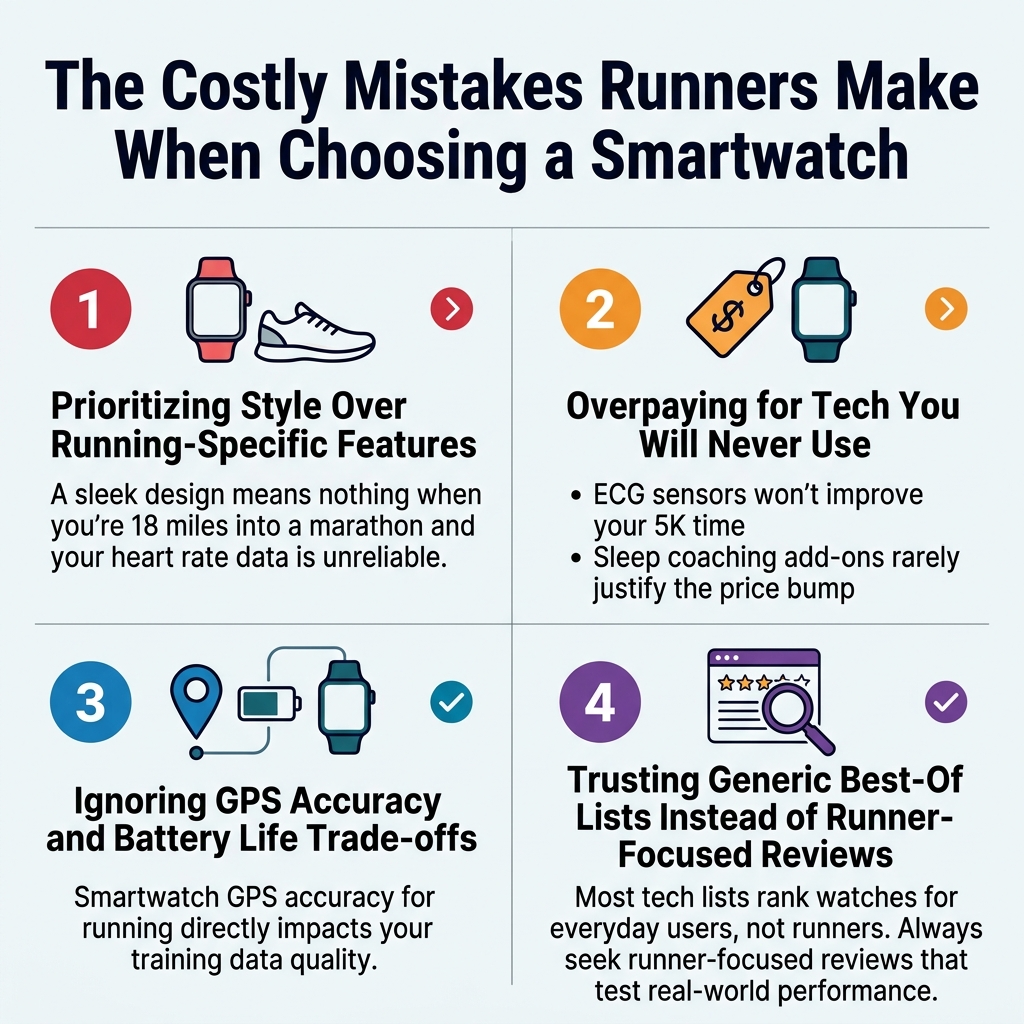
A. Prioritizing Style Over Running-Specific Features
Your smartwatch needs to work as hard as you do. A sleek design means nothing when you’re 18 miles into a marathon and your heart rate data is unreliable.
B. Overpaying for Tech You Will Never Use
- ECG sensors won’t improve your 5K time
- Sleep coaching add-ons rarely justify the price bump
C. Ignoring GPS Accuracy and Battery Life Trade-offs
Smartwatch GPS accuracy for running directly impacts your training data quality.
D. Trusting Generic Best-Of Lists Instead of Runner-Focused Reviews
Most tech lists rank watches for everyday users, not runners. Always seek runner-focused reviews that test real-world performance.
Key Running Metrics That Actually Improve Your Performance
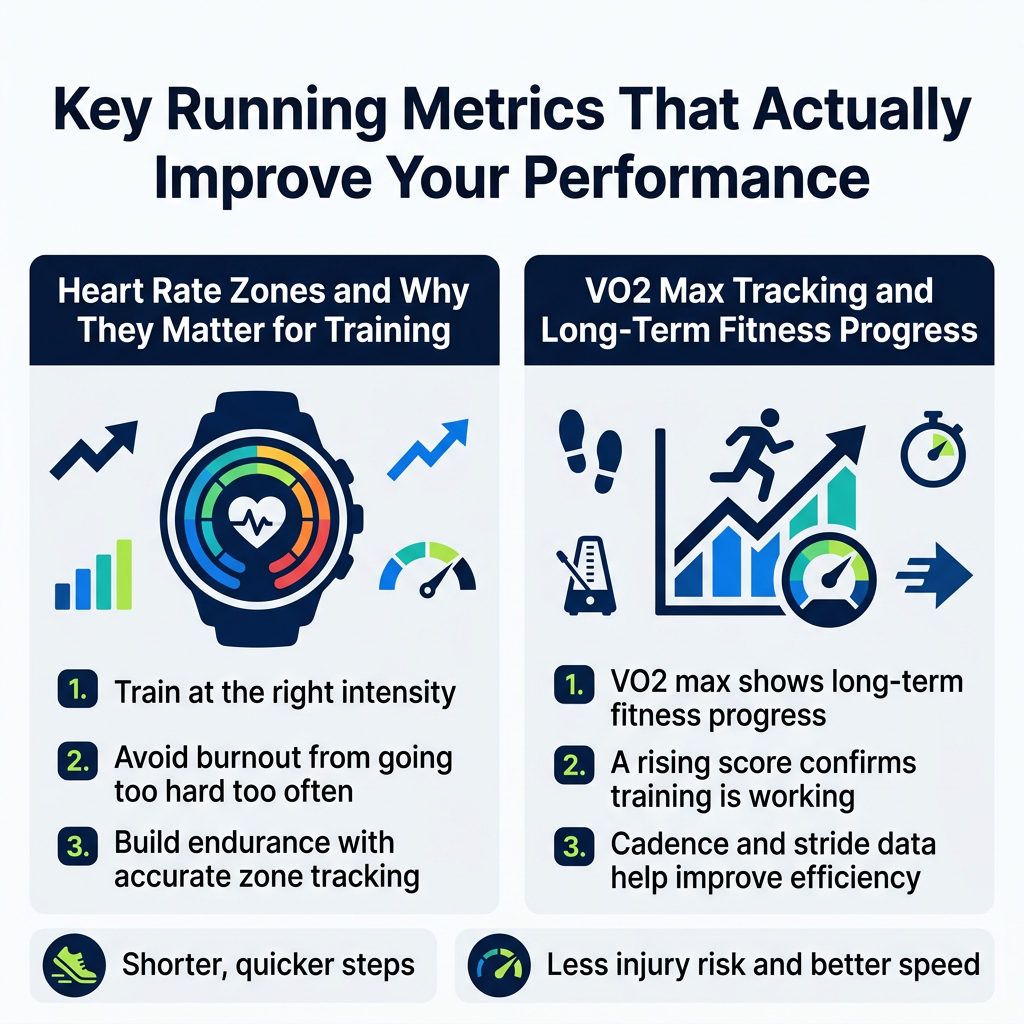
Heart Rate Zones and Why They Matter for Training
Your heart rate zones tell you whether you’re actually building endurance or just spinning your wheels. Training too hard too often leads to burnout; too easy means slow progress. A running smartwatch with accurate zone tracking keeps your efforts targeted and effective.
VO2 Max Tracking and Long-Term Fitness Progress
Your VO2 max score is your fitness report card. Watching it climb over months confirms your training is working. Cadence and stride data help you spot inefficiencies—shorter, quicker steps typically mean less injury risk and better speed over time.
How to Match a Smartwatch to Your Running Goals
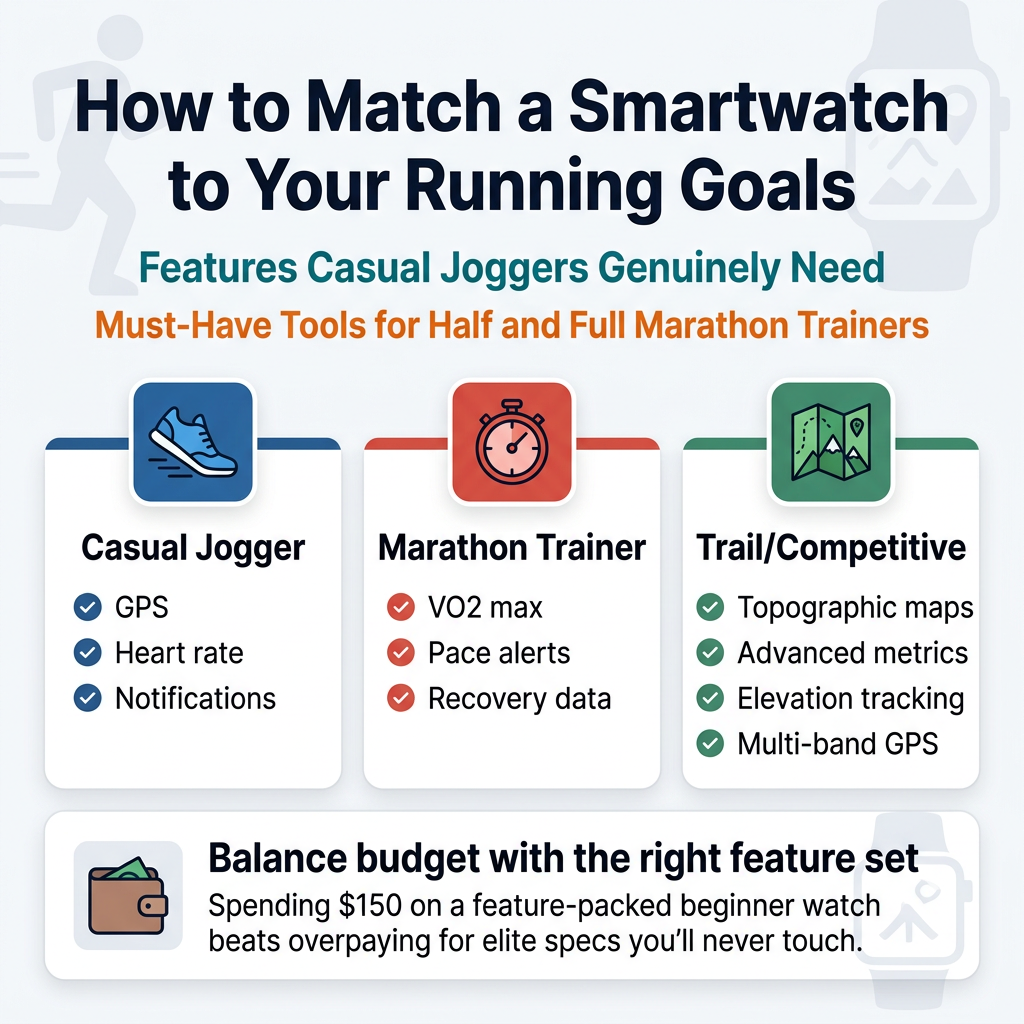
Features Casual Joggers Genuinely Need
Must-Have Tools for Half and Full Marathon Trainers
Your goals completely shape which running smartwatch is right for you. Casual joggers need basic GPS accuracy, heart rate monitoring, and step tracking — nothing more. Marathon trainers should prioritize VO2 max estimates, training load tracking, and recovery insights.
| Runner Type | Core Features Needed |
|---|---|
| Casual Jogger | GPS, heart rate, notifications |
| Marathon Trainer | VO2 max, pace alerts, recovery data |
| Trail/Competitive | Topographic maps, advanced metrics |
Advanced Data for Competitive and Trail Runners
Balancing Budget With the Right Feature Set
Competitive runners genuinely need multi-band GPS accuracy, elevation tracking, and real-time performance analytics. Trail runners specifically benefit from topographic mapping. Your budget should reflect your commitment — spending $150 on a feature-packed beginner watch beats overpaying for elite specs you’ll never touch.
The Smartwatch Specs Runners Should Always Compare
GPS Chip Quality and Route Accuracy
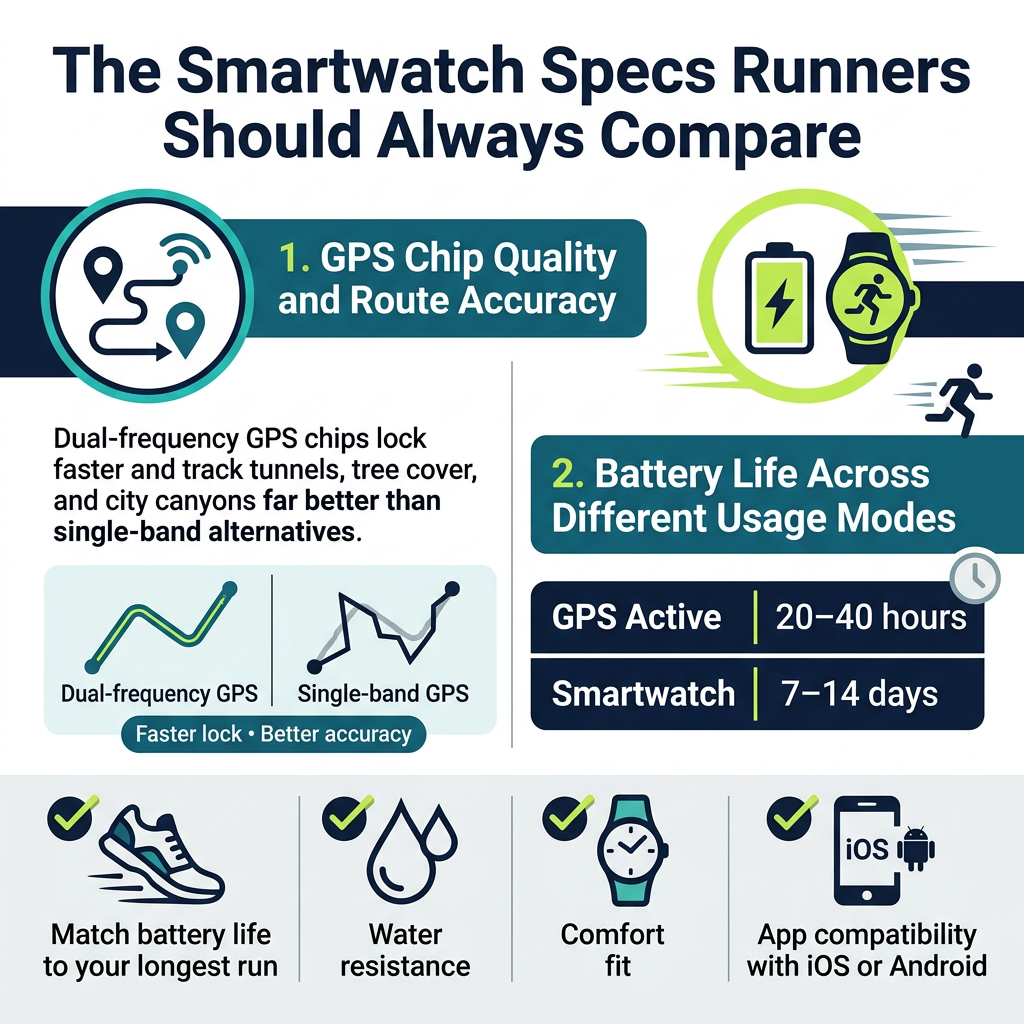
Your GPS accuracy can make or break your training data. Dual-frequency GPS chips (like those in Garmin’s newer models) lock faster and track tunnels, tree cover, and city canyons far better than single-band alternatives.
Battery Life Across Different Usage Modes
| Mode | What to Expect |
|---|---|
| GPS Active | 20–40 hours (varies by watch) |
| Smartwatch | 7–14 days |
Match battery life to your longest run, whether that’s a 5K or a full marathon training block. Water resistance, comfort fit, and app compatibility with iOS or Android round out your decision.
Top Smartwatch Picks Matched to Different Runner Types
A. Best Budget Option for New Runners
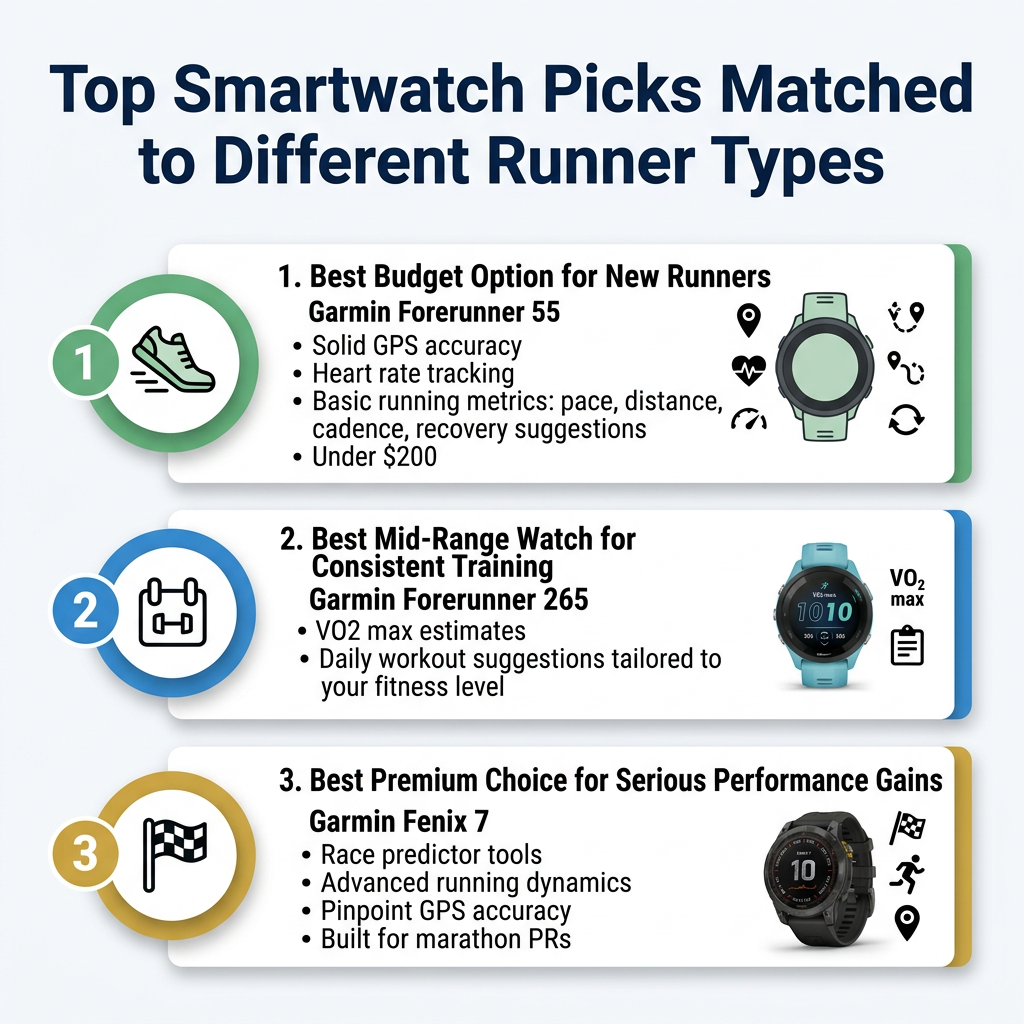
The Garmin Forerunner 55 gives you solid GPS accuracy, heart rate tracking, and basic running metrics without draining your wallet. You get everything you need to build a foundation — pace, distance, cadence, and recovery suggestions — all under $200.
B. Best Mid-Range Watch for Consistent Training
The Garmin Forerunner 265 steps up your training with VO2 max estimates and daily workout suggestions tailored to your fitness level.
C. Best Premium Choice for Serious Performance Gains
If you’re chasing marathon PRs, the Garmin Fenix 7 delivers race predictor tools, advanced running dynamics, and pinpoint GPS accuracy your training demands.
Simple Steps to Make the Right Purchase Decision
Define Your Training Goals Before You Shop
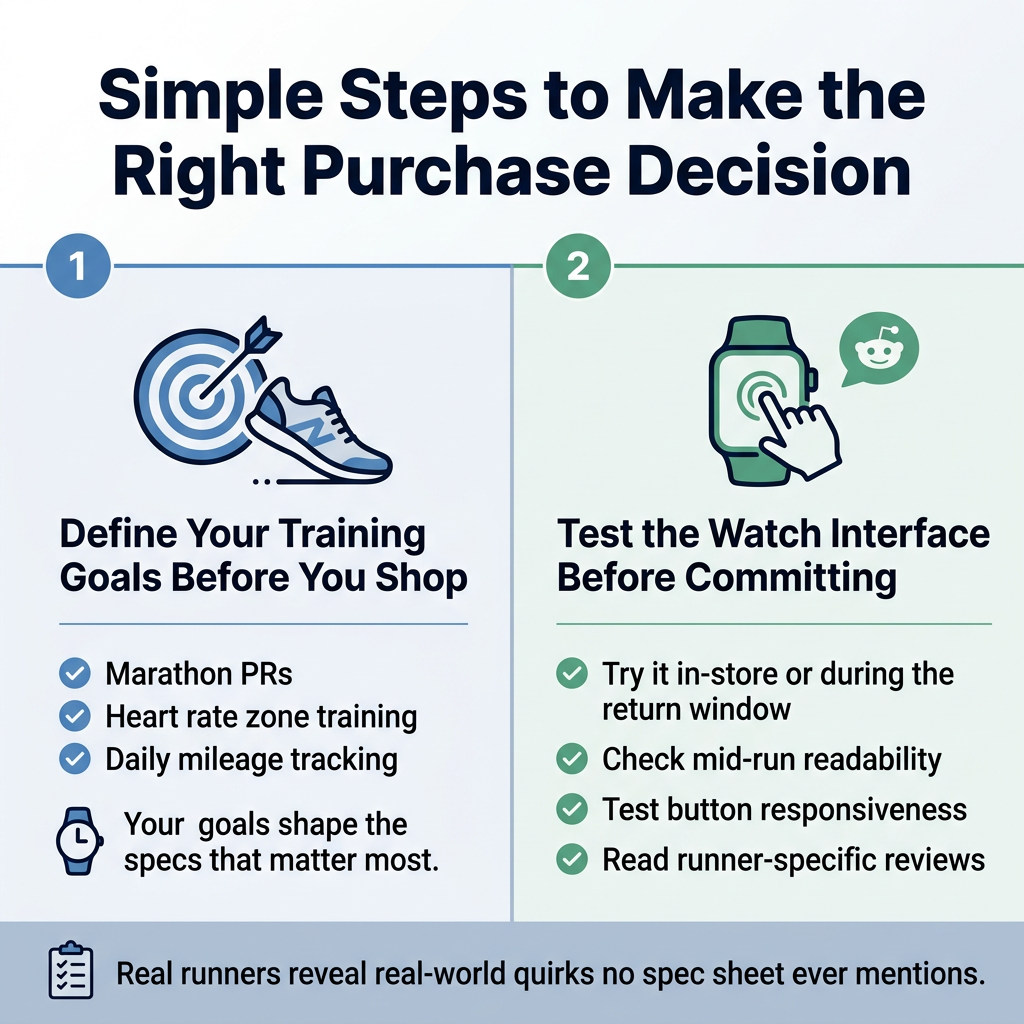
Before browsing any best GPS running watch, get clear on what you actually need. Are you chasing marathon PRs, training by heart rate zones, or just tracking daily mileage? Your goals directly shape which running smartwatch specs matter most to you.
Test the Watch Interface Before Committing
Always try the watch in-store or use a return window to run with it. Check mid-run readability and button responsiveness. Pair this with runner-specific reviews from communities like Reddit’s r/running—real runners reveal real-world quirks no spec sheet ever mentions.
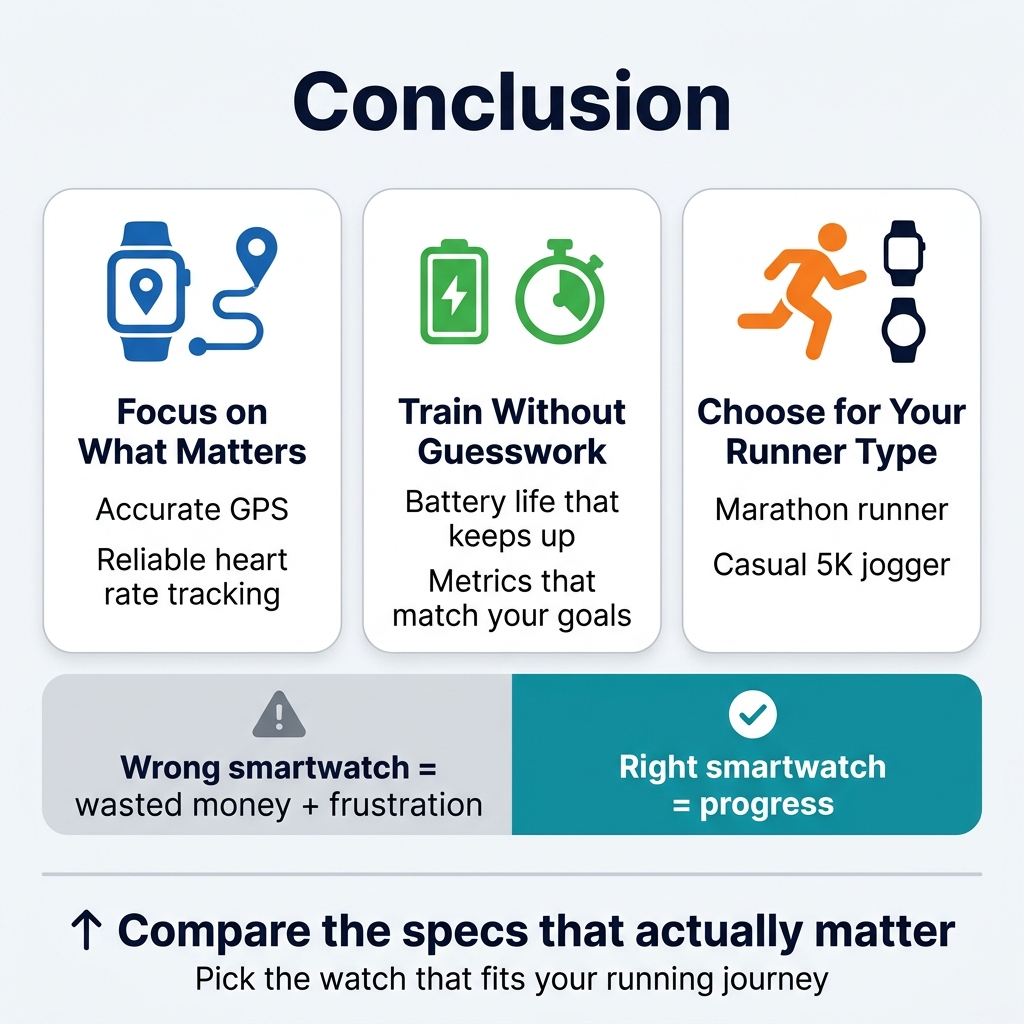
Picking the wrong smartwatch is an easy mistake to make, especially when there are so many options packed with features you may never actually use. The key is staying focused on what genuinely helps your running — accurate GPS, reliable heart rate tracking, battery life that keeps up with your training, and metrics that match your specific goals. A watch built for a marathon runner looks very different from one designed for a casual 5K jogger, and knowing that difference saves you both money and frustration.
Before you hit “add to cart,” take a step back and think about where you are in your running journey and where you want to go. Compare the specs that actually matter, lean toward the picks that suit your runner type, and trust that the right smartwatch will make training feel less like guesswork and more like progress. You deserve a watch that works as hard as you do — go find it.

