
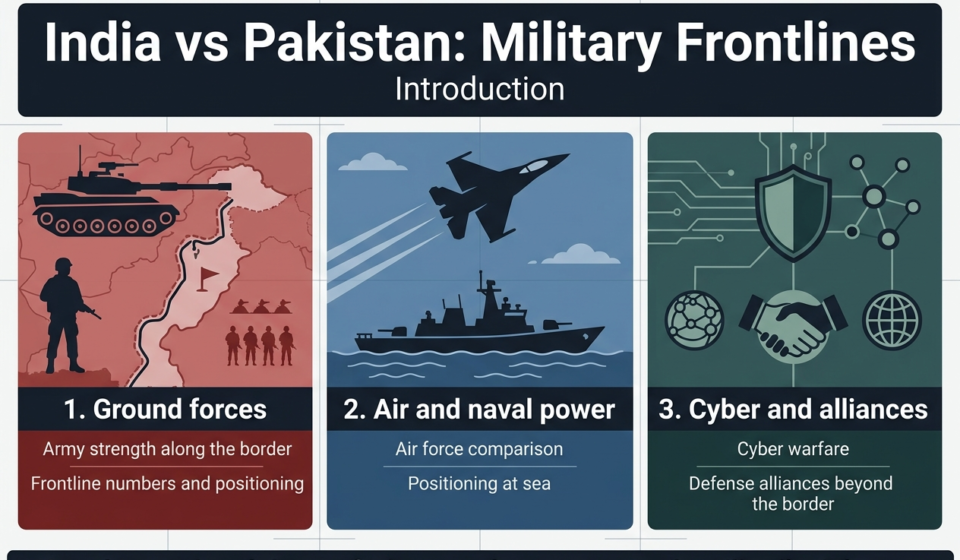

India vs Pakistan: Military Frontlines
If you’ve ever wondered how two nuclear-armed neighbors with decades of conflict stack up against each other, you’re in the right place. This breakdown is for defense enthusiasts, students of geopolitics, and anyone trying to make sense of one of the world’s most intense South Asia military rivalries without wading through a textbook.
We’ll get into the real India Pakistan military comparison — from boots on the ground to what’s happening in the skies. Here’s a quick look at what we’ll cover:
- Ground forces: How the India vs Pakistan army strength plays out along the border, and what the frontline numbers actually mean
- Air and naval power: A straight look at the India Pakistan air force comparison and how each country is positioning itself at sea
- Cyber and alliances: How India Pakistan cyber warfare is reshaping modern conflict, and why India Pakistan defense alliances are changing the game beyond the border
No fluff, no political spin — just a clear, honest breakdown of where each country stands militarily right now.
Historical Context of India-Pakistan Military Rivalry
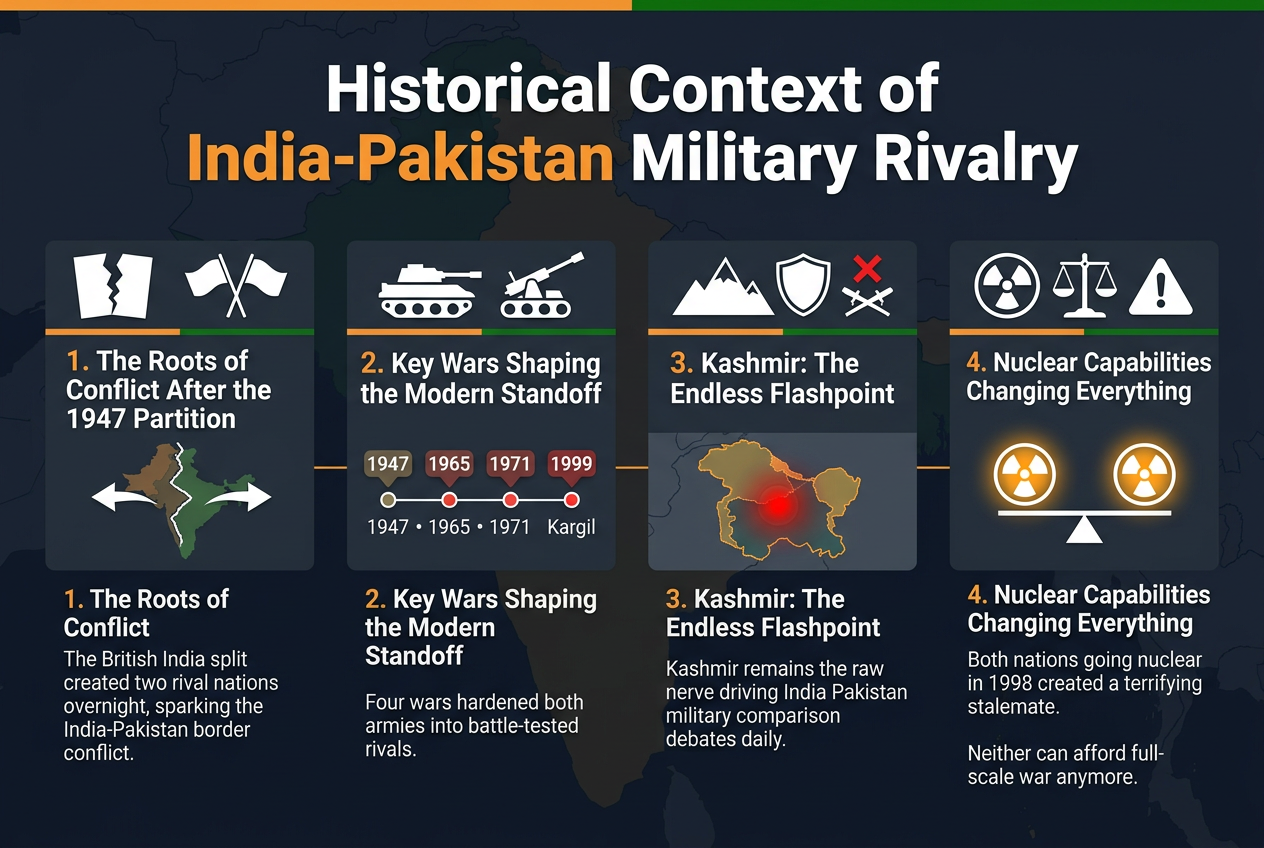
The Roots of Conflict After the 1947 Partition
The British India split created two rival nations overnight, sparking the India-Pakistan border conflict that still burns today.
Key Wars Shaping the Modern Standoff
Four wars — 1947, 1965, 1971, and 1999’s Kargil — hardened both armies into battle-tested rivals, defining today’s South Asia military rivalry.
Kashmir: The Endless Flashpoint
Kashmir remains the raw nerve driving India Pakistan military comparison debates daily.
Nuclear Capabilities Changing Everything
Both nations going nuclear in 1998 created a terrifying stalemate — neither can afford full-scale war anymore.
Comparing Ground Forces on the Frontlines
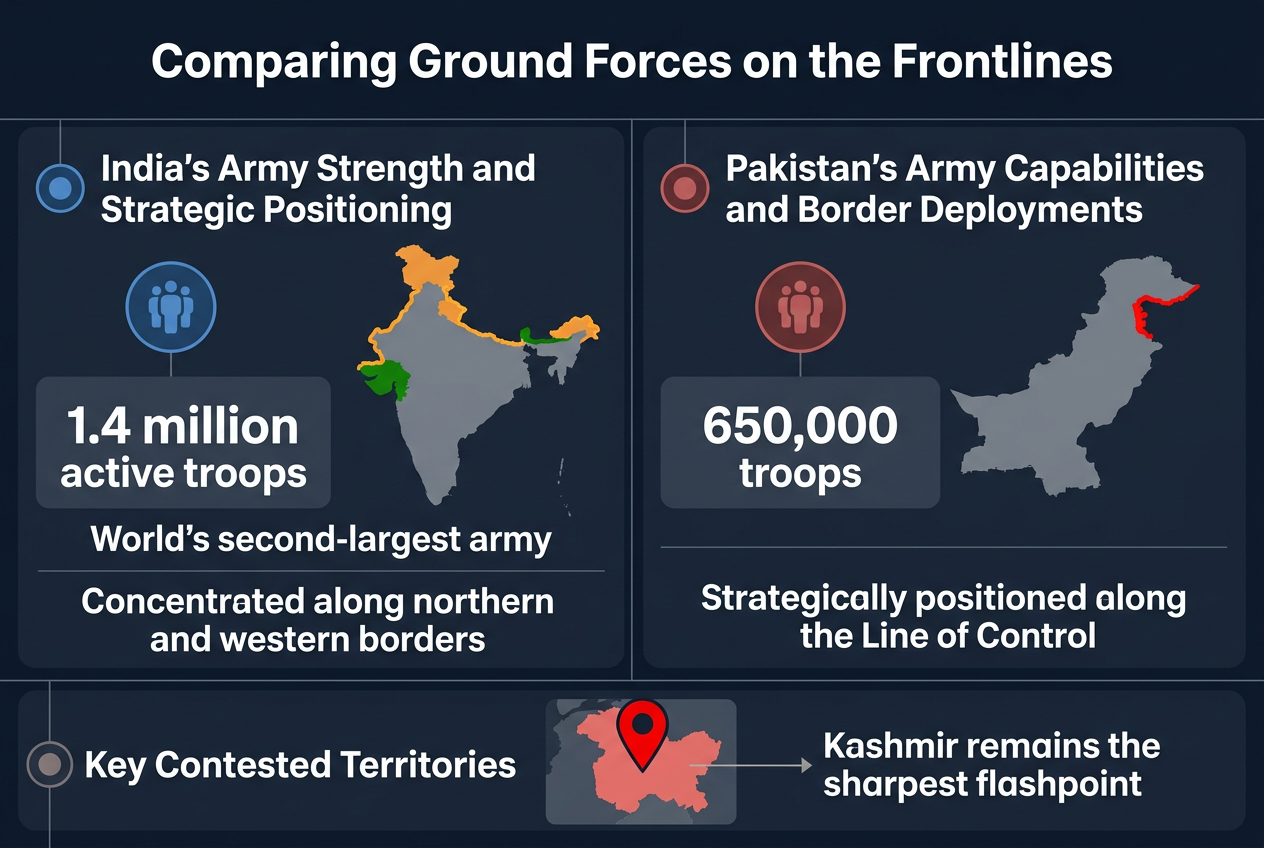
India’s Army Strength and Strategic Positioning
India fields 1.4 million active troops, the world’s second-largest army, concentrated heavily along northern and western borders.
Pakistan’s Army Capabilities and Border Deployments
Pakistan deploys around 650,000 troops, strategically positioned along the Line of Control.
Key Contested Territories
Kashmir remains the sharpest flashpoint in the India-Pakistan military comparison.
Air Power and Aerial Superiority
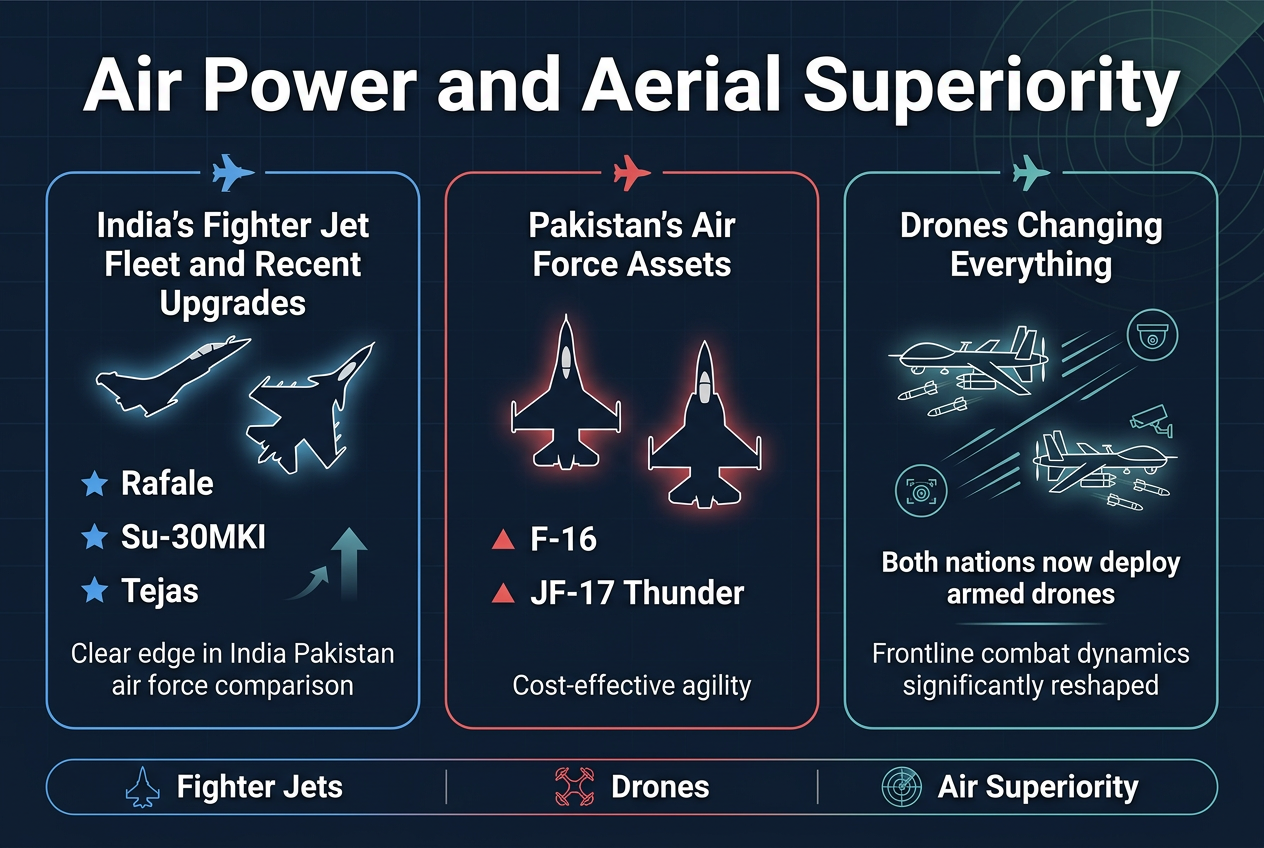
India’s Fighter Jet Fleet and Recent Upgrades
India operates Rafales, Su-30MKIs, and Tejas fighters, giving it a clear edge in the India Pakistan air force comparison.
Pakistan’s Air Force Assets
Pakistan relies on F-16s and JF-17 Thunders, offering cost-effective agility.
Drones Changing Everything
Both nations now deploy armed drones, reshaping frontline combat dynamics significantly.
Naval Forces and Maritime Strategic Interests
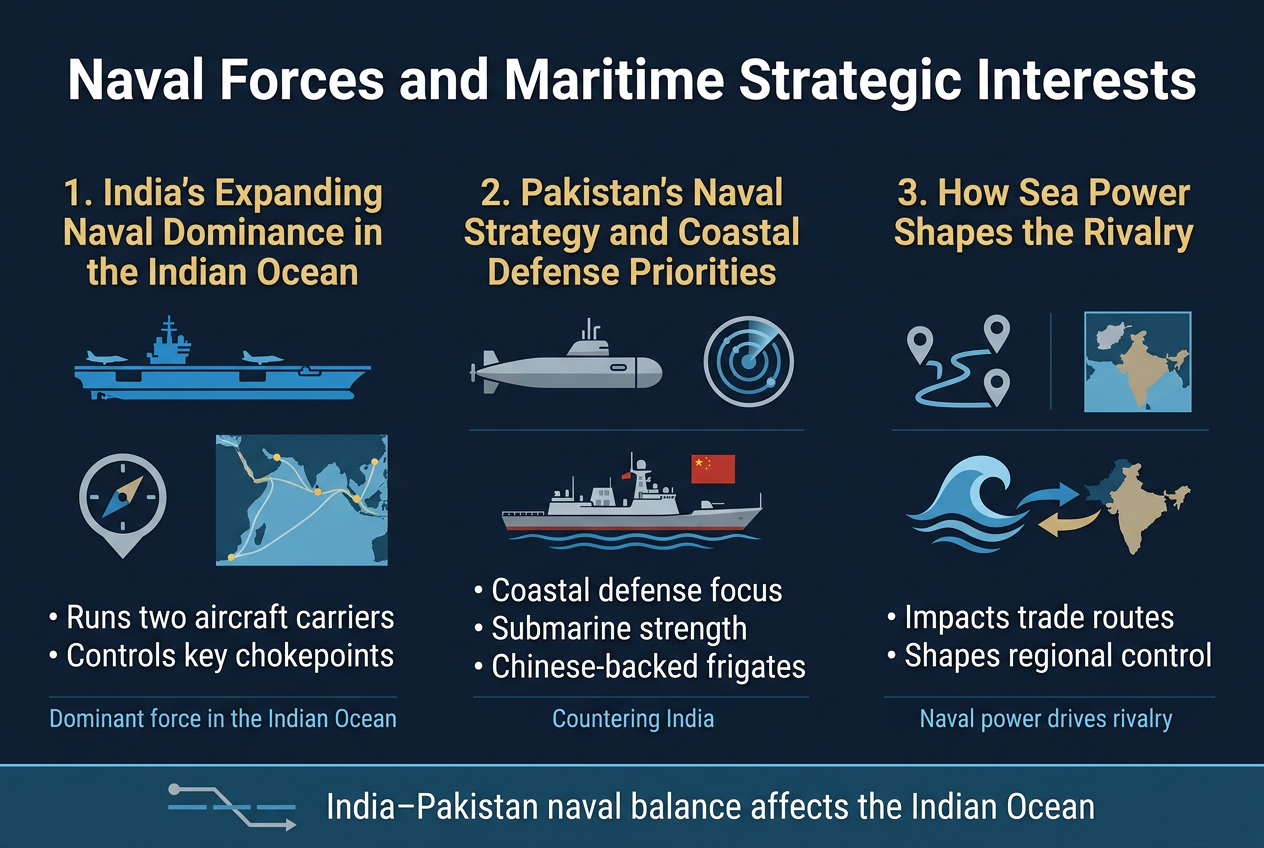
India’s Expanding Naval Dominance in the Indian Ocean
India runs two aircraft carriers and controls key chokepoints, making it the dominant force in the Indian Ocean.
Pakistan’s Naval Strategy and Coastal Defense Priorities
Pakistan focuses on coastal defense, submarines, and Chinese-backed frigates to counter India.
How Sea Power Shapes the Rivalry
India Pakistan naval power directly impacts trade routes and regional control.
Intelligence, Surveillance, and Cyber Warfare
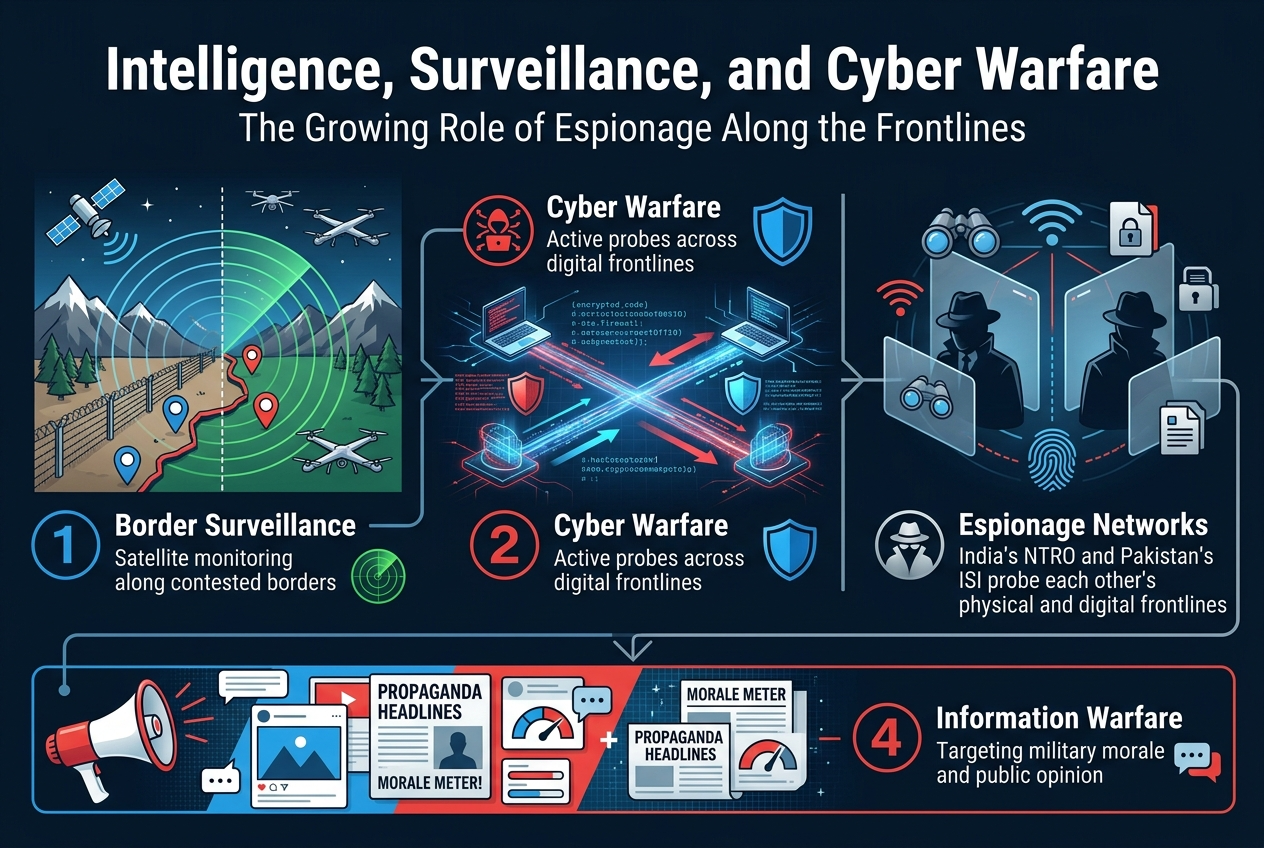
The Growing Role of Espionage Along the Frontlines
India-Pakistan cyber warfare and border surveillance have intensified dramatically. Both nations run active espionage networks, deploy satellite monitoring along contested borders, and wage information warfare targeting military morale and public opinion. India’s NTRO and Pakistan’s ISI constantly probe each other’s digital and physical frontlines, making intelligence a critical battlefield.
Global Alliances and Their Impact on the Frontlines
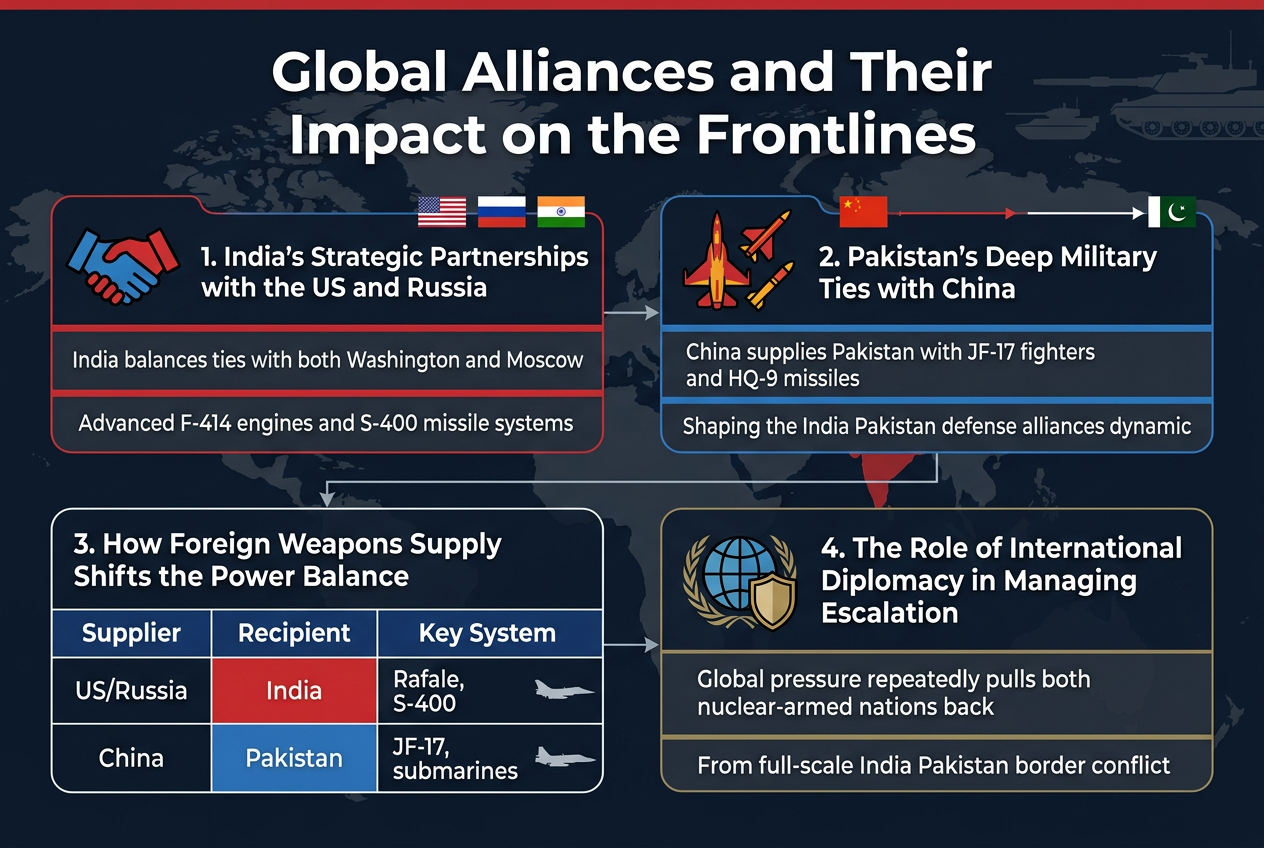
India’s Strategic Partnerships with the US and Russia
India balances ties with both Washington and Moscow, securing advanced F-414 engines and S-400 missile systems simultaneously.
Pakistan’s Deep Military Ties with China
China supplies Pakistan with JF-17 fighters and HQ-9 missiles, directly shaping the India Pakistan defense alliances dynamic.
How Foreign Weapons Supply Shifts the Power Balance
| Supplier | Recipient | Key System |
|---|---|---|
| US/Russia | India | Rafale, S-400 |
| China | Pakistan | JF-17, submarines |
The Role of International Diplomacy in Managing Escalation
Global pressure repeatedly pulls both nuclear-armed nations back from full-scale India Pakistan border conflict.
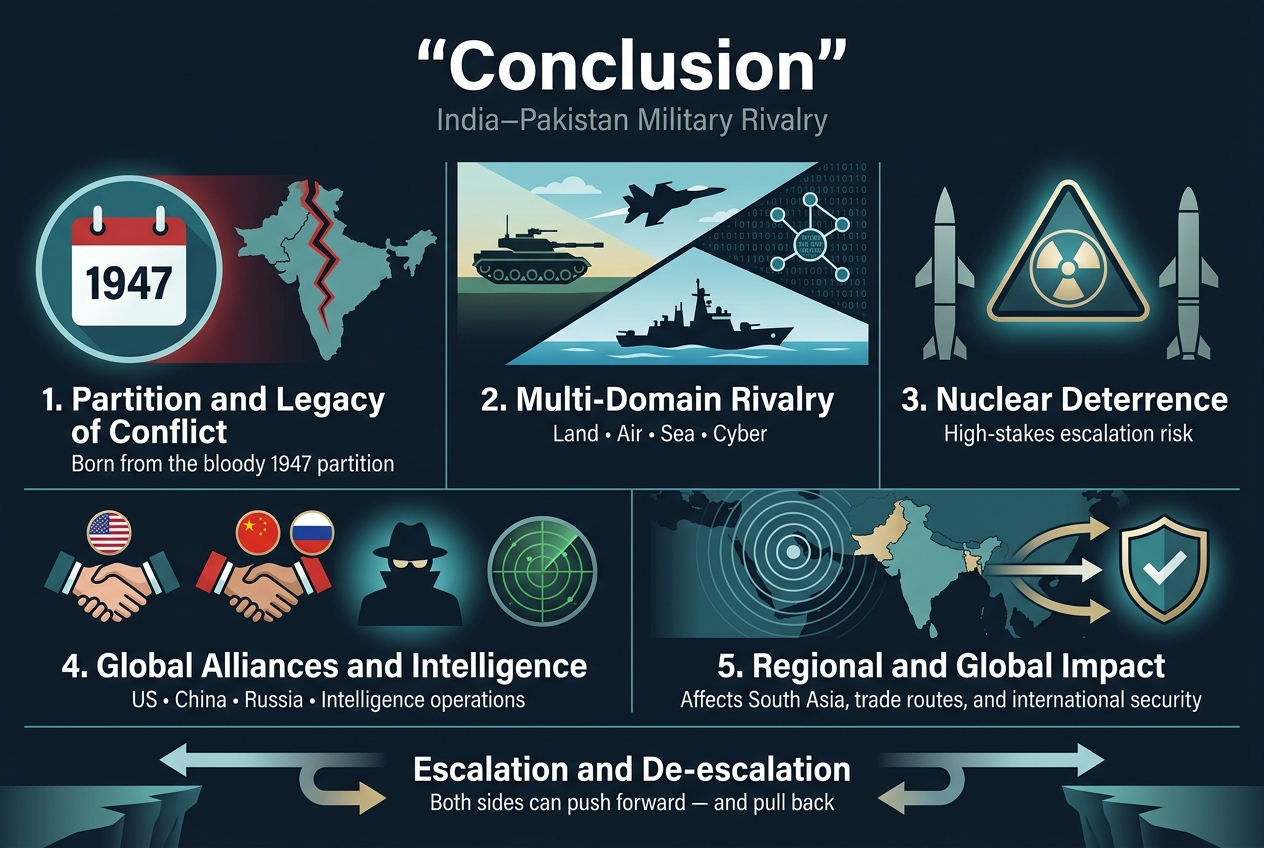
The India-Pakistan military rivalry is one of the most complex and high-stakes standoffs in the world. From the bloody partition of 1947 to the present day, both nations have built massive military machines shaped by decades of conflict, mistrust, and competing national interests. On the ground, in the skies, at sea, and now in the digital battlefield, both countries continue to invest heavily in staying one step ahead of each other. Add in the nuclear dimension, global alliances with powers like the US, China, and Russia, and a web of intelligence operations, and you have a rivalry that keeps military analysts and world leaders watching closely.
What makes this standoff particularly critical is that it goes beyond just two neighboring countries flexing their muscles. The outcomes of this rivalry ripple across South Asia and beyond, affecting regional stability, global trade routes, and international security calculations. Both sides have shown they are capable of escalation, but also of pulling back from the brink when things get too hot. Staying informed about how these military dynamics shift over time is not just for defense experts — it matters for anyone who wants to understand the pulse of one of the world’s most strategically important regions. Keep following the developments, because this story is far from over.


